
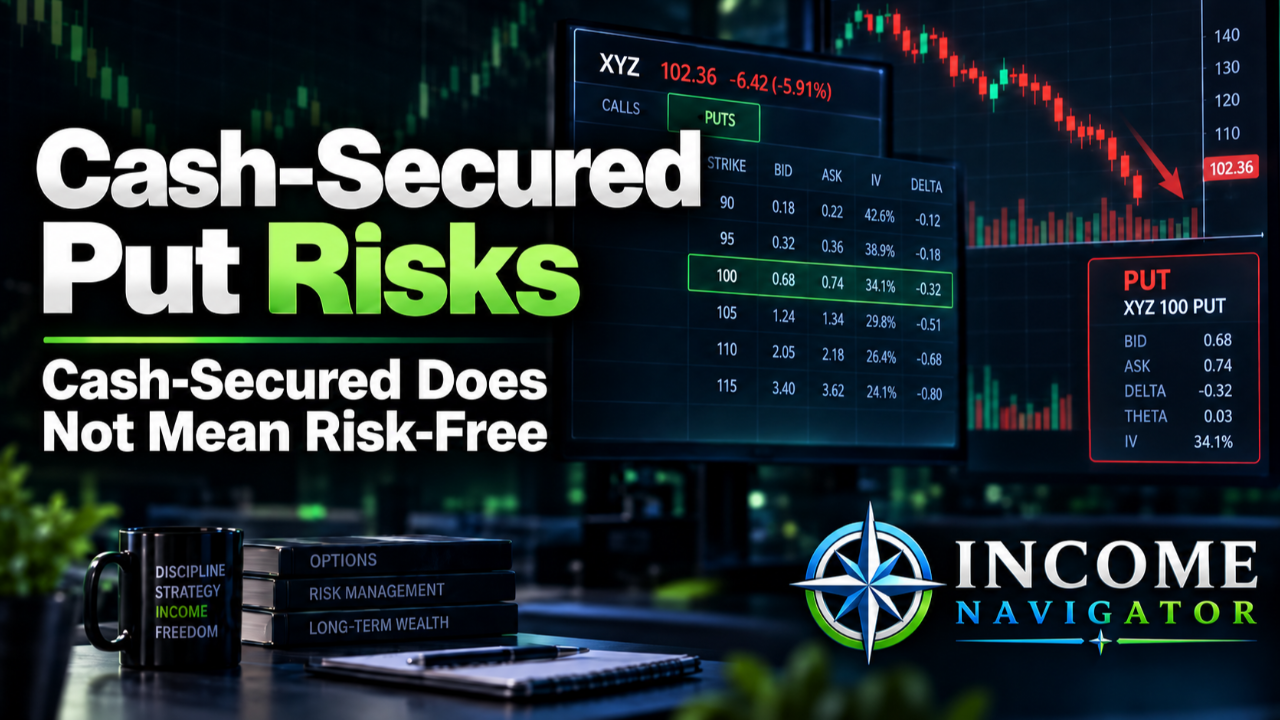
The phrase cash-secured put sounds safer than it really is.
You sell a put option.
You keep enough cash in the account to buy 100 shares if you are assigned.
You collect premium while you wait.
And because the position is backed by cash, it can feel like the risk has already been handled.
But
...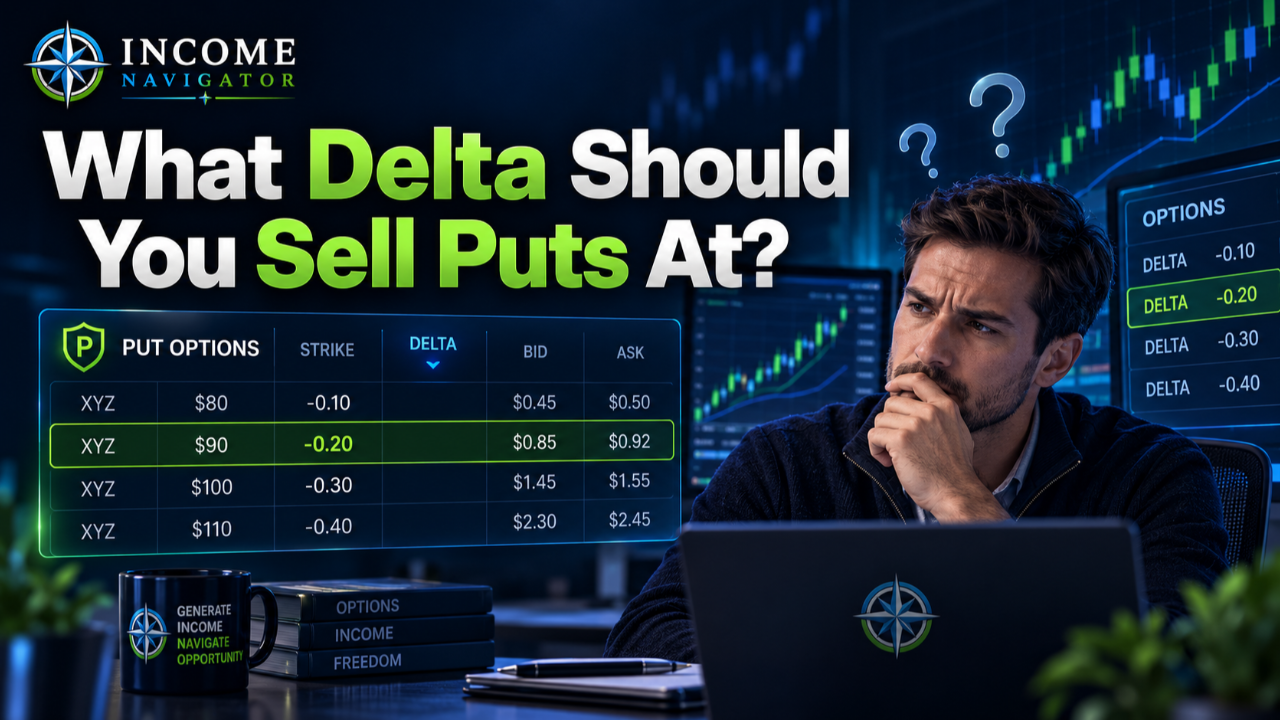
One of the first questions traders ask when selling cash-secured puts is simple:
It sounds like there should be one clean answer.
Sell the 10 delta if you want safety.
Sell the 20 delta if you want more premium.
Sell the 30 delta if you are comfortable taking more as
...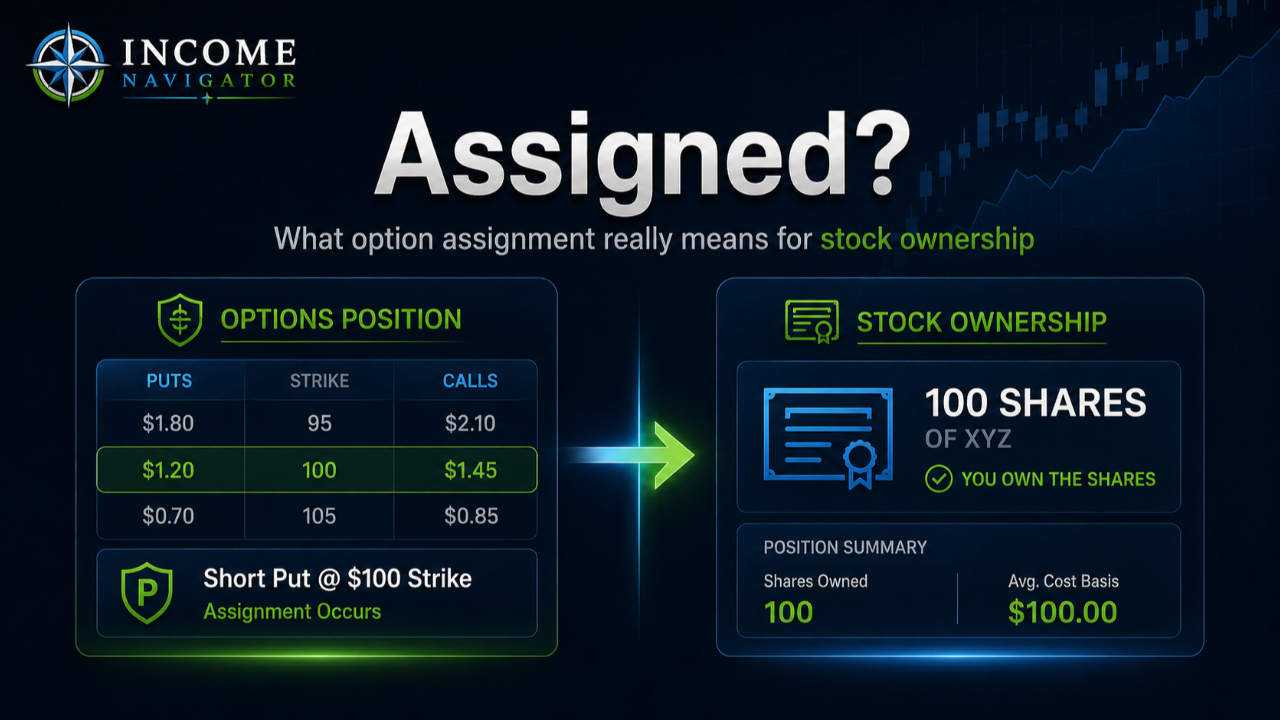
You sold a cash-secured put because you were comfortable owning the stock at the strike price.
Then the stock starts falling.
Your short put moves into the money.
The premium you collected no longer feels like the main part of the trade.
Now there is a different question:
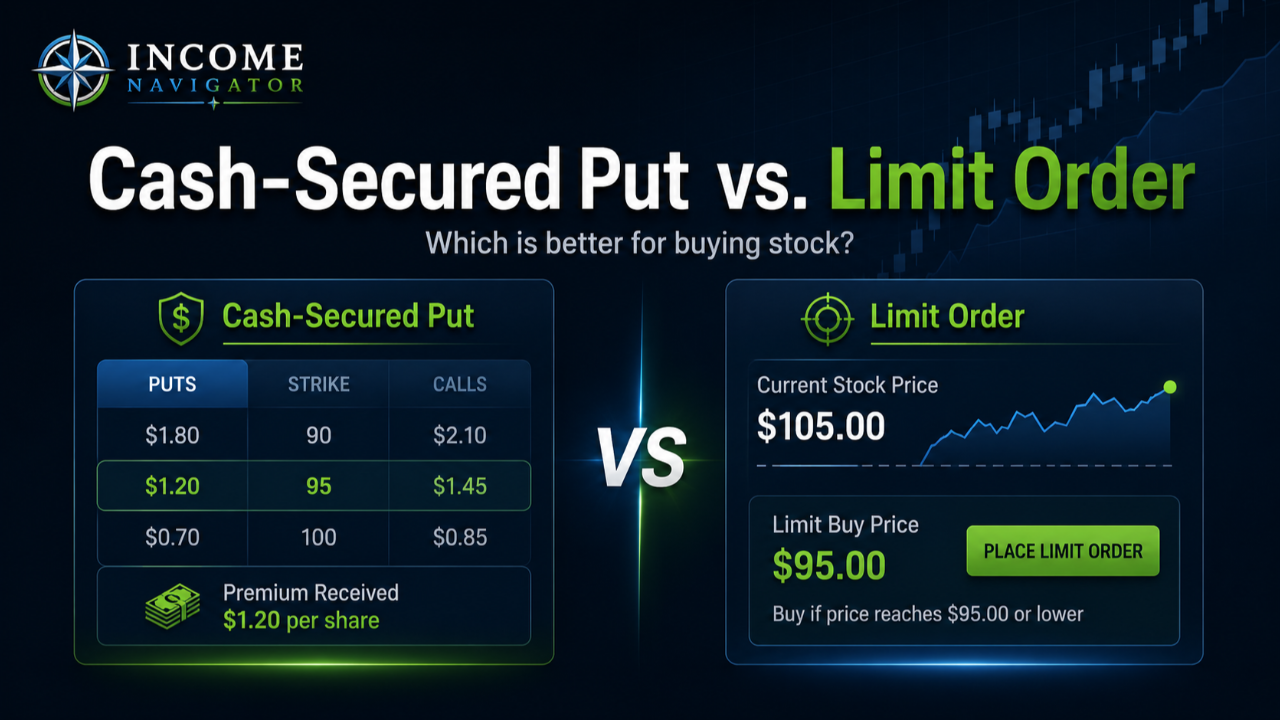
You have decided there is a stock you would like to own.
It is trading at $105.
You would be comfortable buying it at $95.
Now you have two choices.
Or do you sell a $95 cash-secured put and collect premium while you wait?
On the surface, the cash-secured put ca
...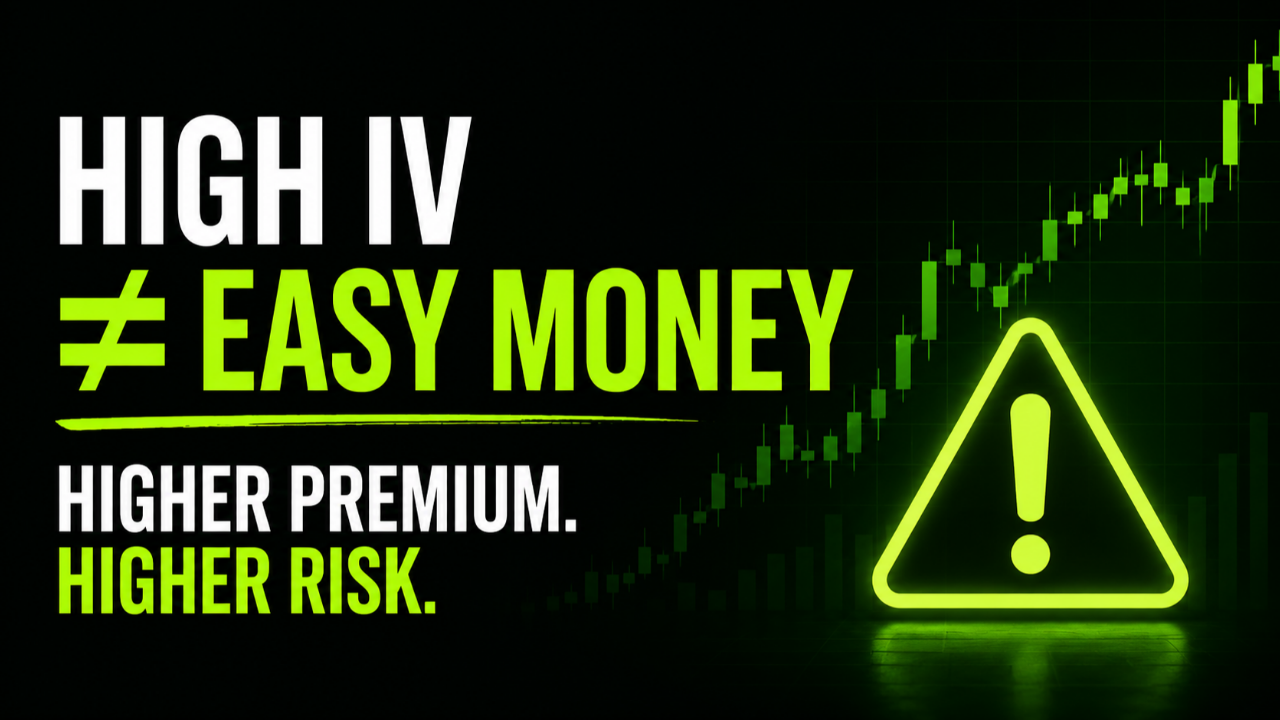
A lot of options traders start their search the same way:
The logic seems simple.
High implied volatility means expensive options. Expensive options mean more premium. More premium means more potential income.
But that way of thinking s
...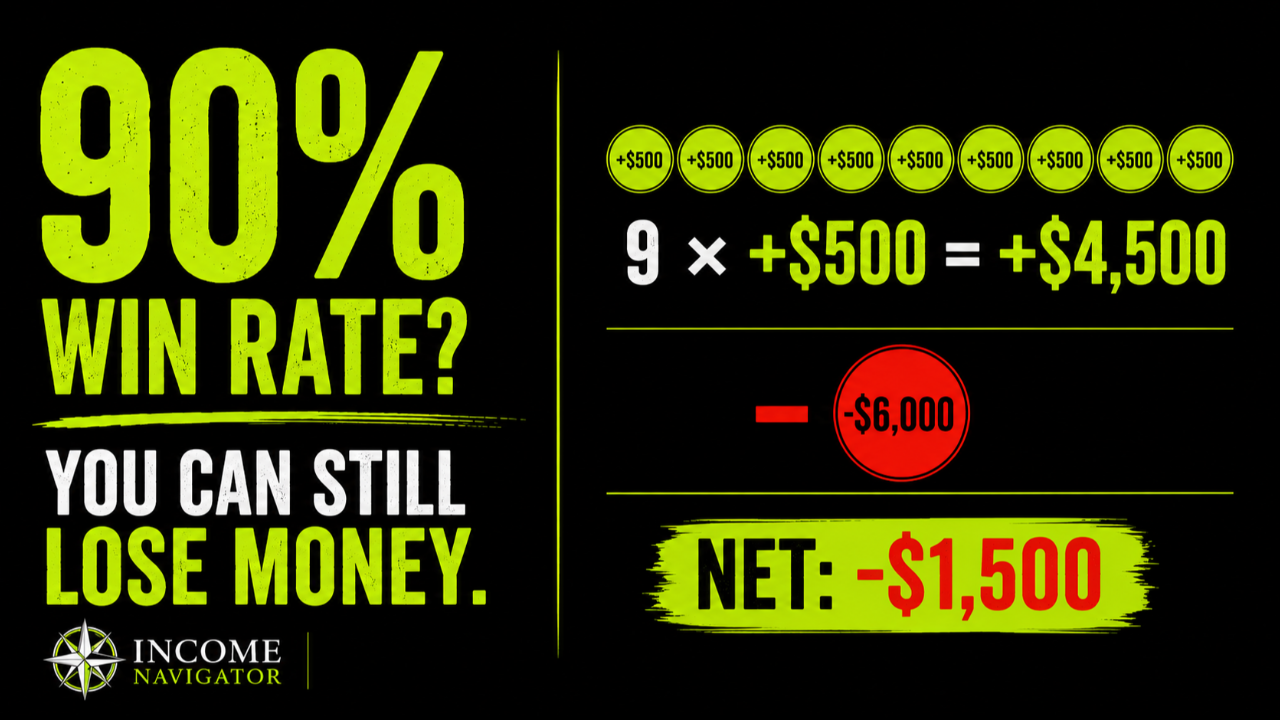
What's your win rate?
It's one of the first statistics traders like to talk about.
70% sounds good.
80% sounds even better.
90% sounds incredible.
But there's a problem.
A high win rate doesn't necessarily mean you're making money.
In fact, some of the most dangerous trading strategies can
...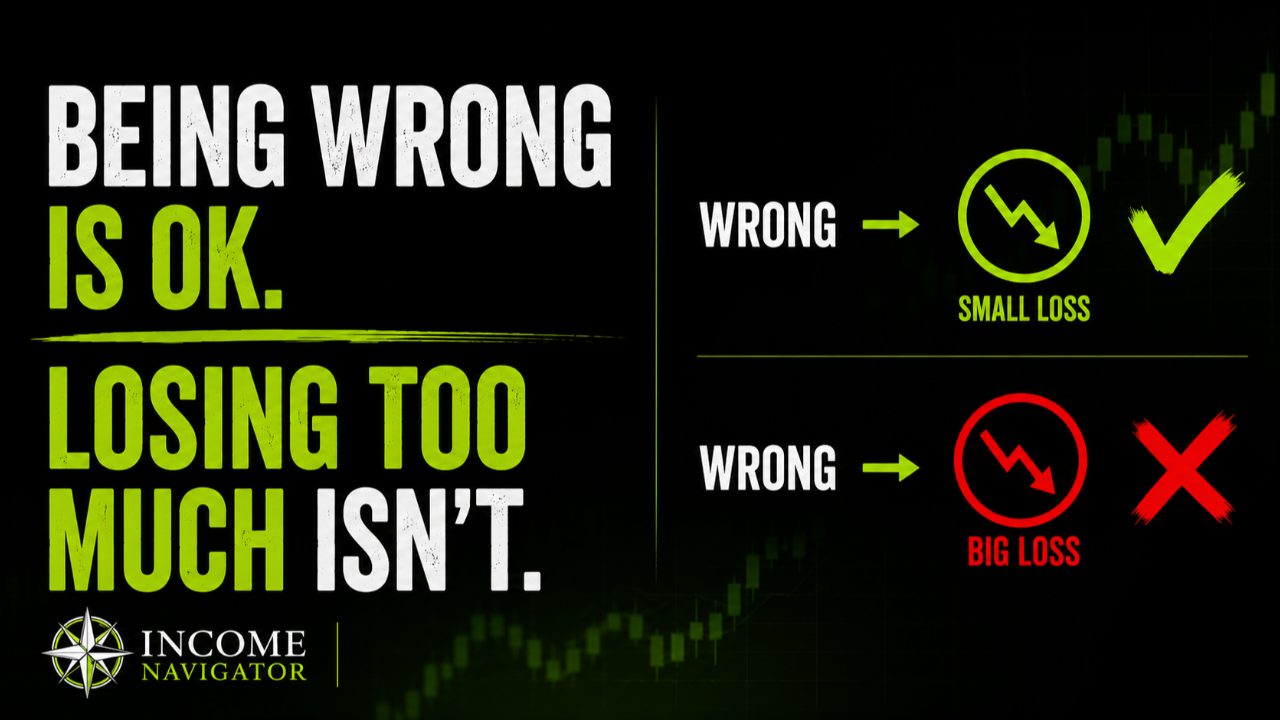
You're going to be wrong.
If you trade long enough, there's no way around it.
You'll be bullish right before the market drops.
You'll sell premium before volatility expands.
You'll enter what looks like a great setup and watch it immediately move against you.
That's trading.
But there's an i
...