

A Dynamic Poor Man’s Covered Call and a standard Poor Man’s Covered Call use the same basic options structure.
Both use a long-dated call.
Both sell a shorter-term call against it.
Both are designed to create long exposure while collecting premium from the short call.
So why use two different
...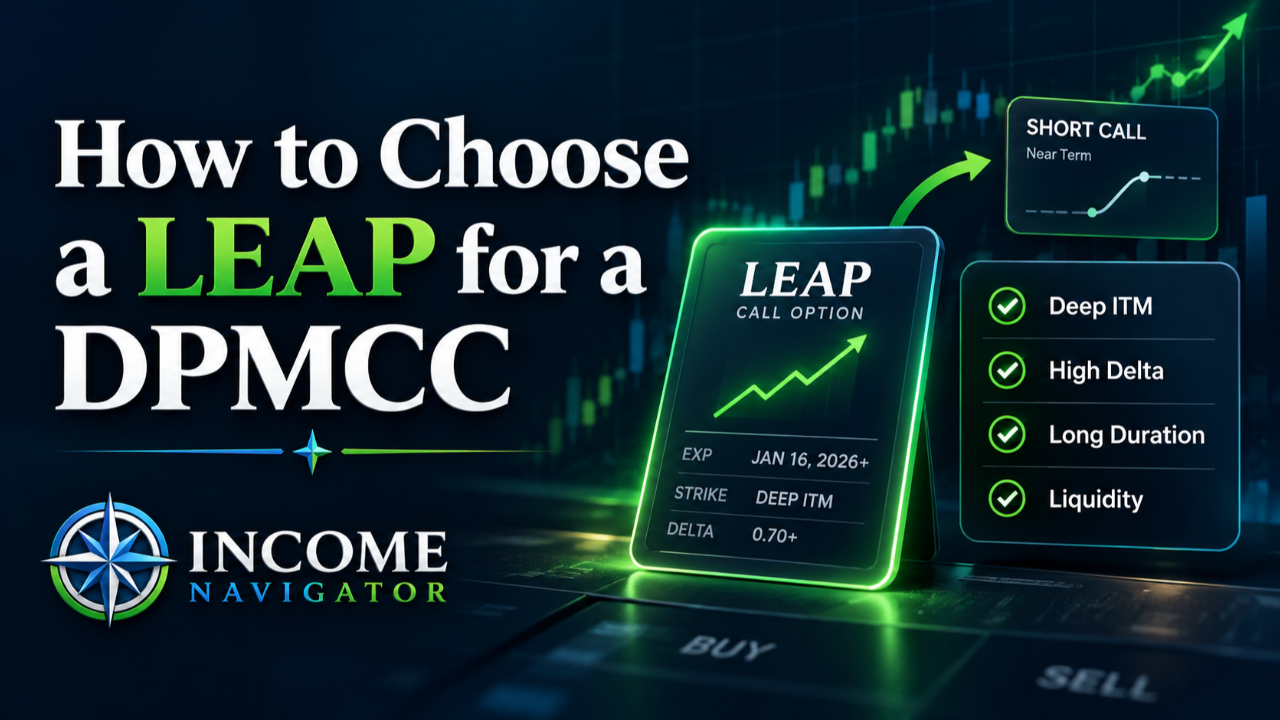
The long LEAP is the foundation of a Dynamic Poor Man’s Covered Call.
It is the part of the position that creates the long exposure.
It is the part that can lose the most value when the underlying falls.
And it is the part that determines whether the short-call income process has a strong found
...
Cash-secured puts are often presented as one of the simplest ways to generate options income.
You sell a put.
You collect premium.
If the stock stays above the strike price, the option may expire worthless.
If the stock falls below the strike, you may be assigned 100 shares at a price you agre
...
A lot of options traders start their search the same way:
The logic seems simple.
High implied volatility means expensive options. Expensive options mean more premium. More premium means more potential income.
But that way of thinking s
...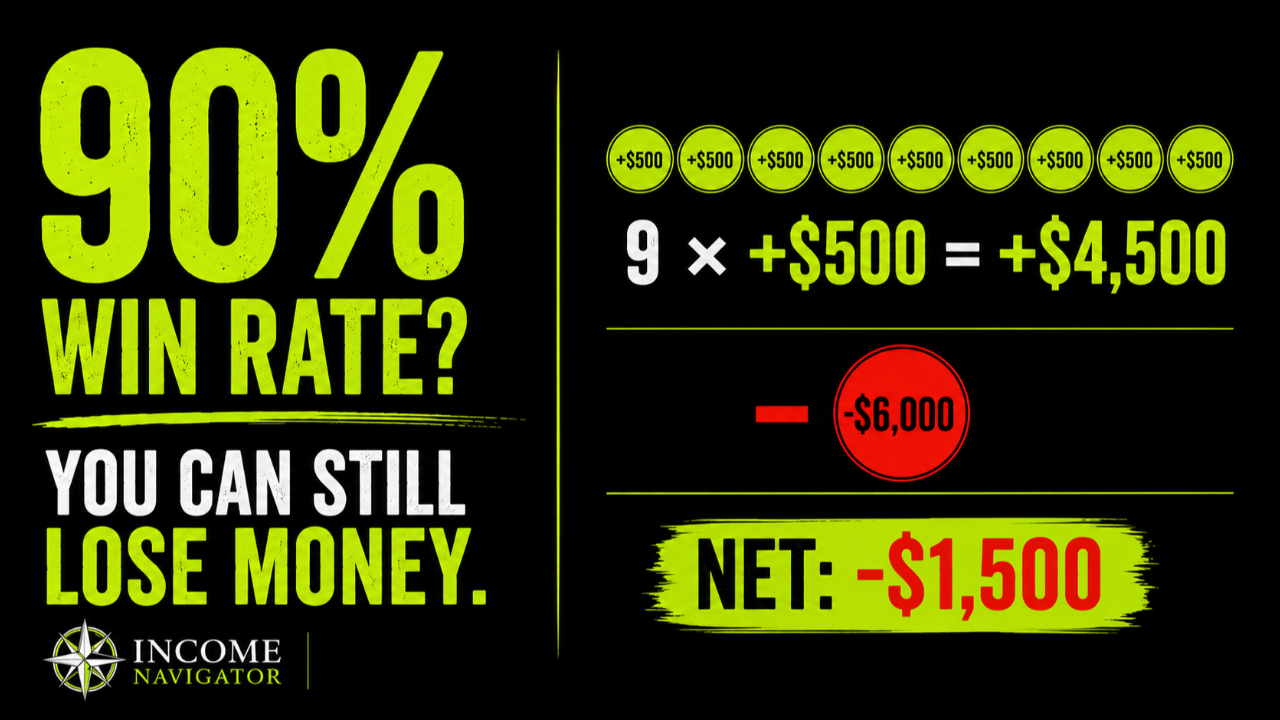
What's your win rate?
It's one of the first statistics traders like to talk about.
70% sounds good.
80% sounds even better.
90% sounds incredible.
But there's a problem.
A high win rate doesn't necessarily mean you're making money.
In fact, some of the most dangerous trading strategies can
...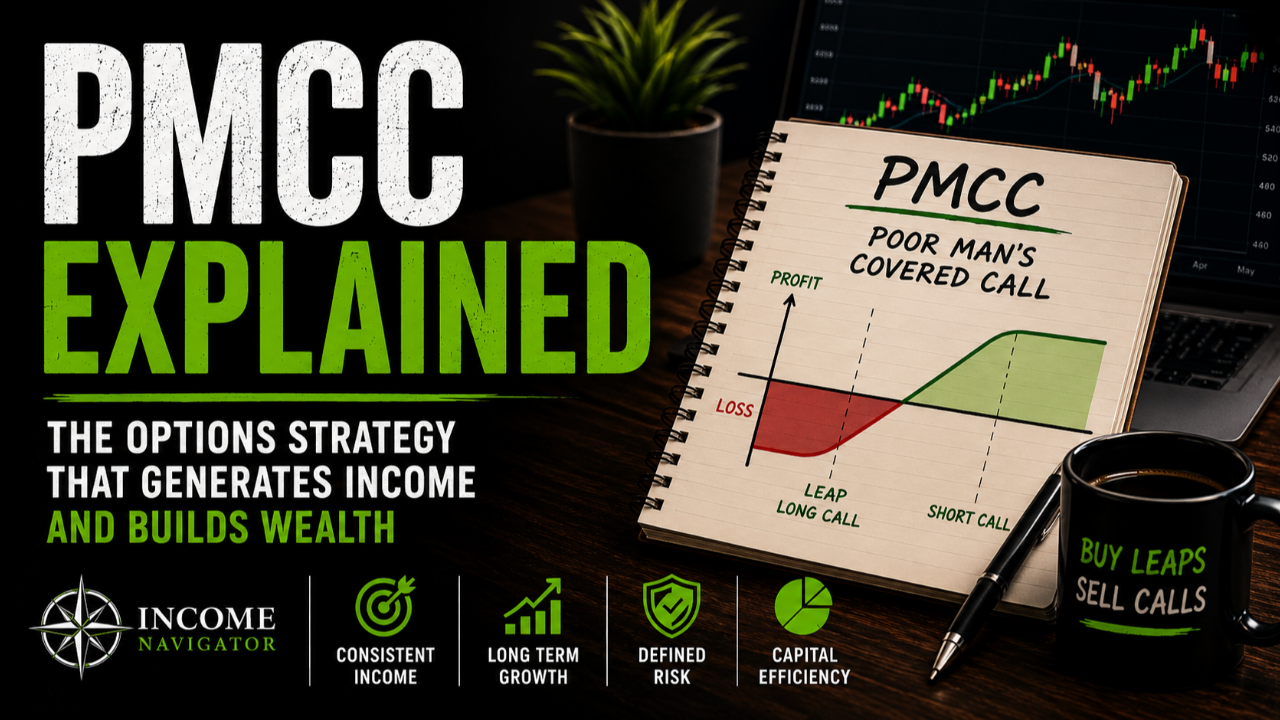
A Poor Man’s Covered Call is often presented as a lower-cost version of a covered call.
Buy a long-dated call.
Sell a shorter-term call against it.
Collect premium.
Repeat.
That sounds simple.
And mechanically, it is.
But a PMCC is not simply a covered call with less capital.
You do not ow
...
A ZEBRA can give a trader stock-like directional exposure without requiring the same capital commitment or leaving the downside as open-ended as owning 100 shares.
But it is not a shortcut.
It is not a free stock replacement.
And it is not a way to ignore risk because the position has a defined
...