
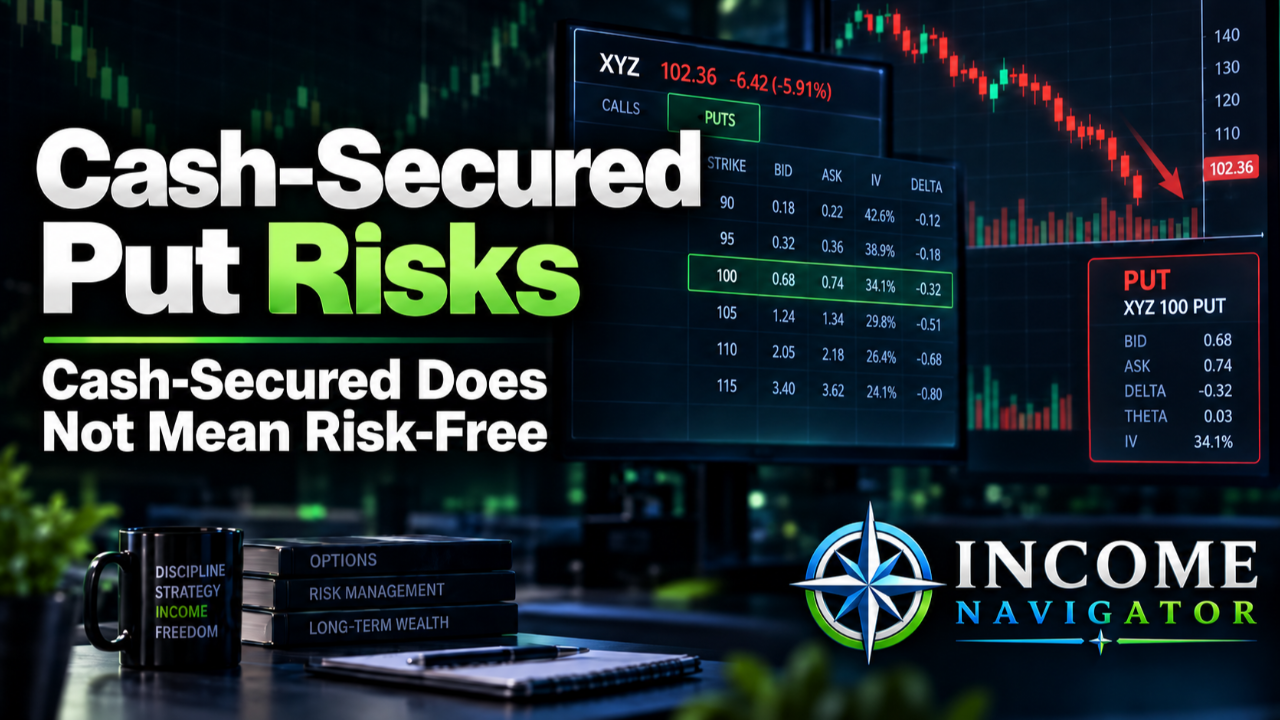
The phrase cash-secured put sounds safer than it really is.
You sell a put option.
You keep enough cash in the account to buy 100 shares if you are assigned.
You collect premium while you wait.
And because the position is backed by cash, it can feel like the risk has already been handled.
But
...
A lot of options traders start their search the same way:
The logic seems simple.
High implied volatility means expensive options. Expensive options mean more premium. More premium means more potential income.
But that way of thinking s
...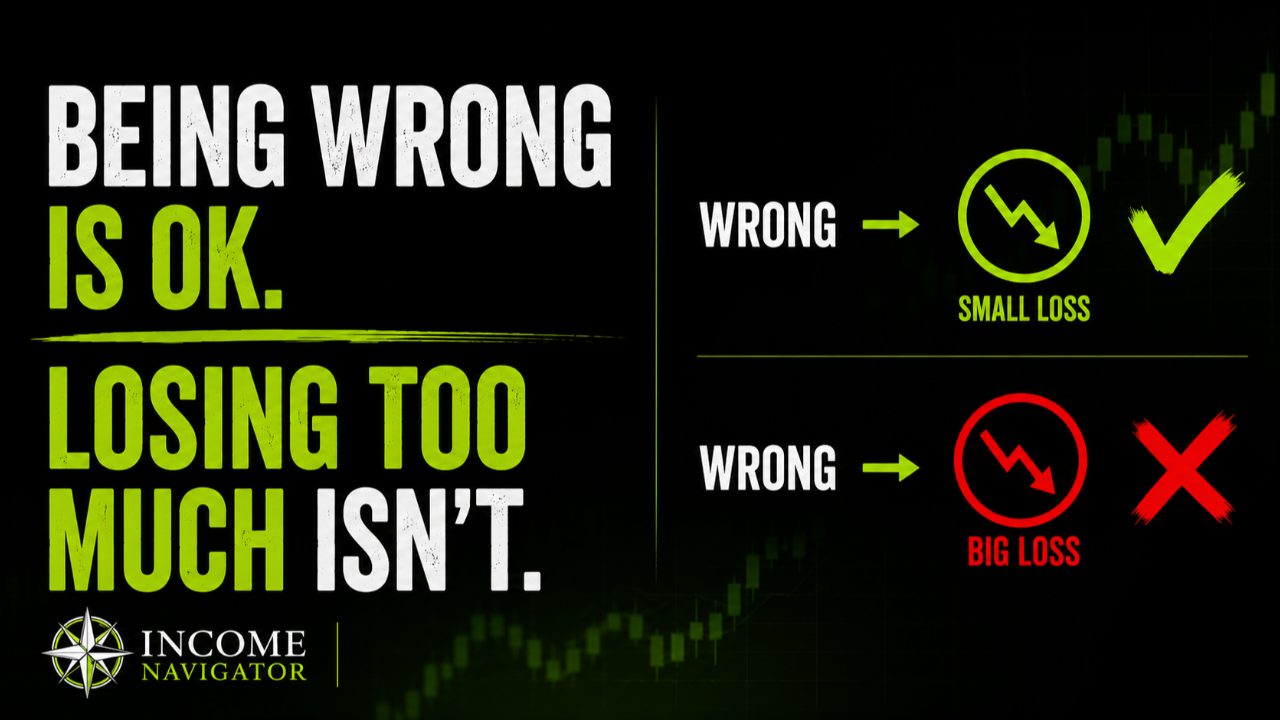
You're going to be wrong.
If you trade long enough, there's no way around it.
You'll be bullish right before the market drops.
You'll sell premium before volatility expands.
You'll enter what looks like a great setup and watch it immediately move against you.
That's trading.
But there's an i
...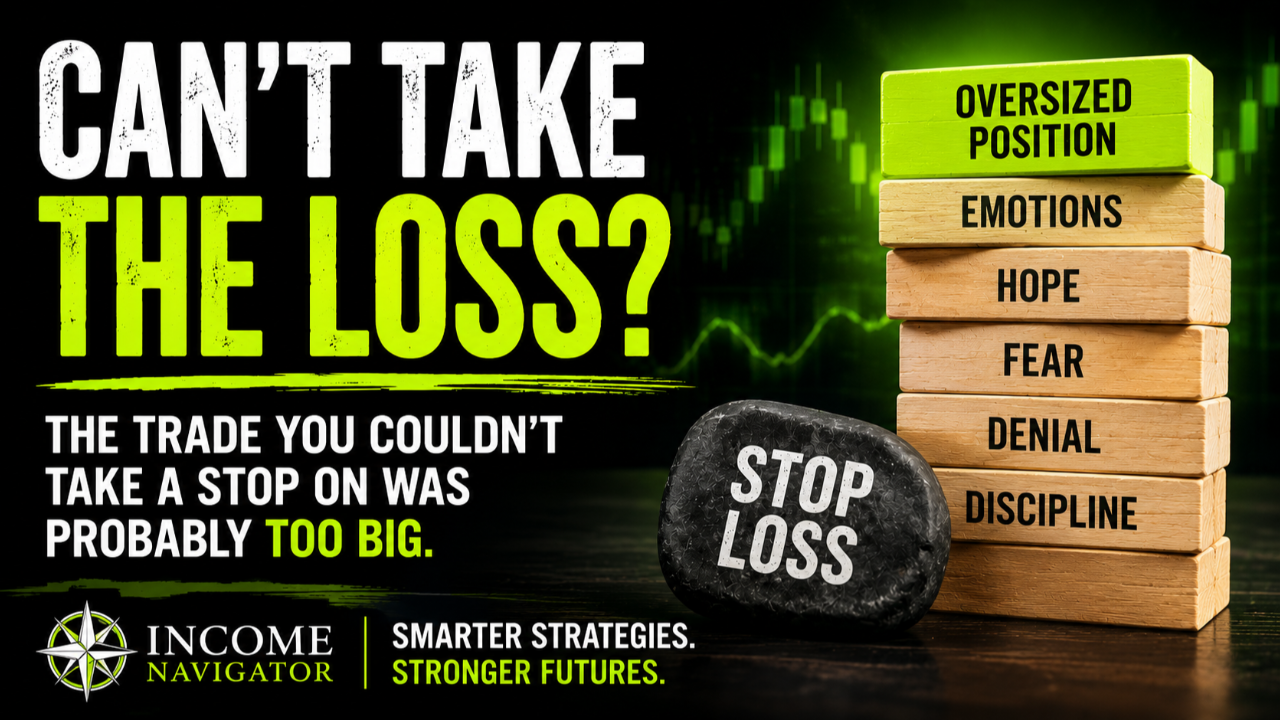
You've probably seen this happen.
A trader enters a position with a clear risk management plan.
If the trade loses $500, they're getting out.
Simple.
Then the trade reaches a $500 loss.
And suddenly the plan changes.
"I'll give it a little more room."
At $750:
"It's already down this much....

Two traders can put on the exact same trade and have completely different experiences.
Same underlying.
Same strikes.
Same expiration.
Same entry price.
But one trader calmly follows the plan while the other watches every tick, checks futures overnight, and starts making adjustments the momen
...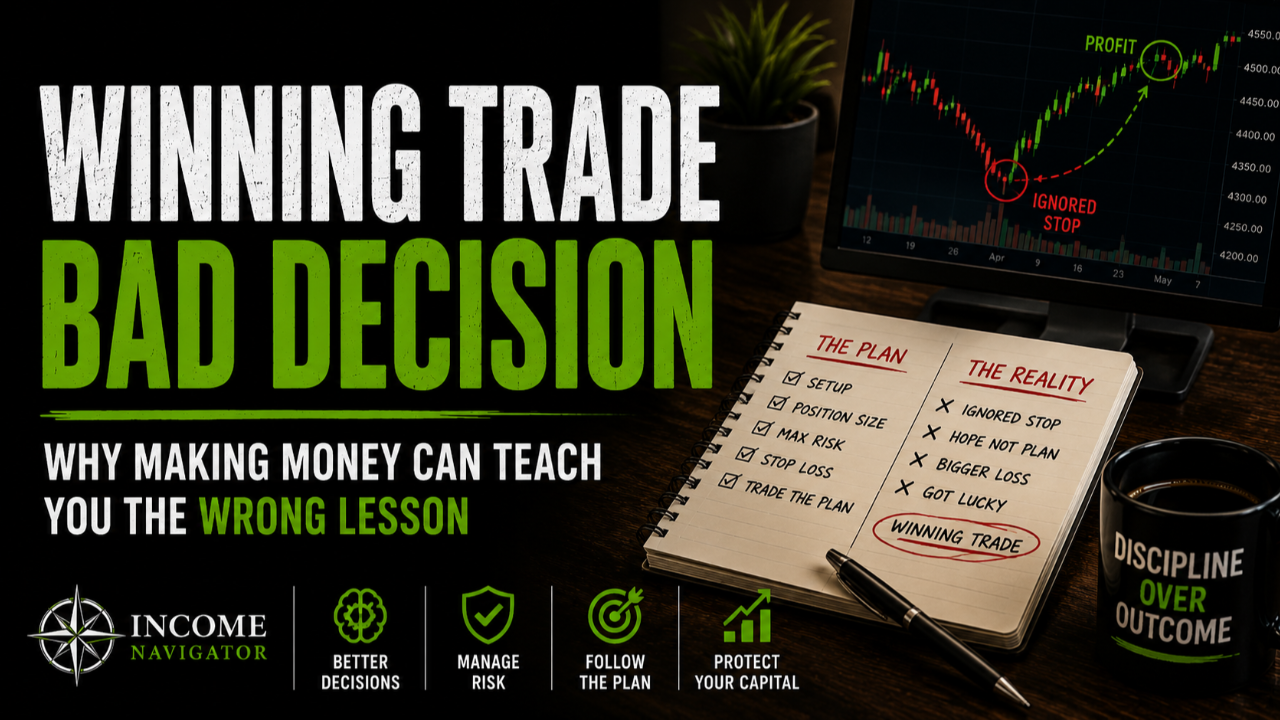
One of the most dangerous things that can happen to a trader isn't losing money.
It's making money while doing something you shouldn't have done.
That sounds backwards.
After all, we're trading to make money.
But there's a big difference between making money on a trade and making a good tradin...
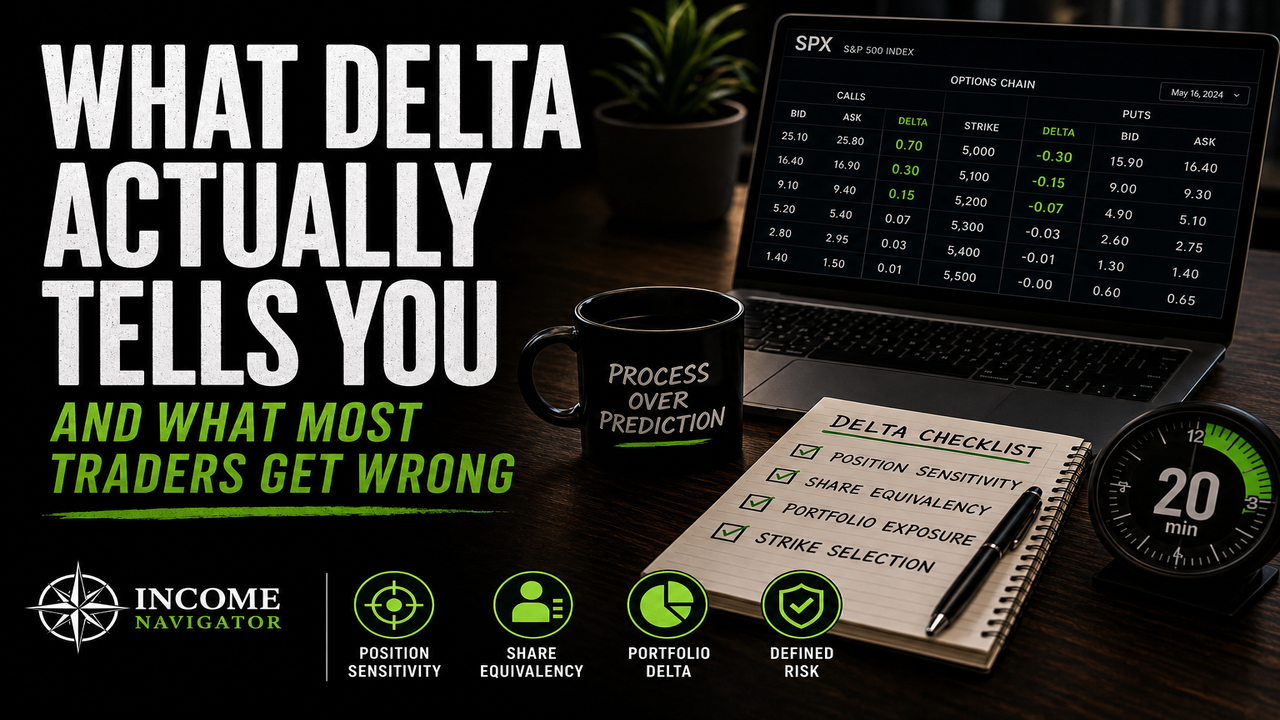
What Delta Actually Tells You (And What Most Traders Get Wrong)
Delta gets thrown around constantly in options education.
"Sell the 0.30 delta call." "Buy the 0.70 delta LEAP."
Everyone nods like they understand it.
Most don't. Not really.
They know the shortcut — delta ≈ probability of expirin...
